A Federal Judge vs. the Granite State
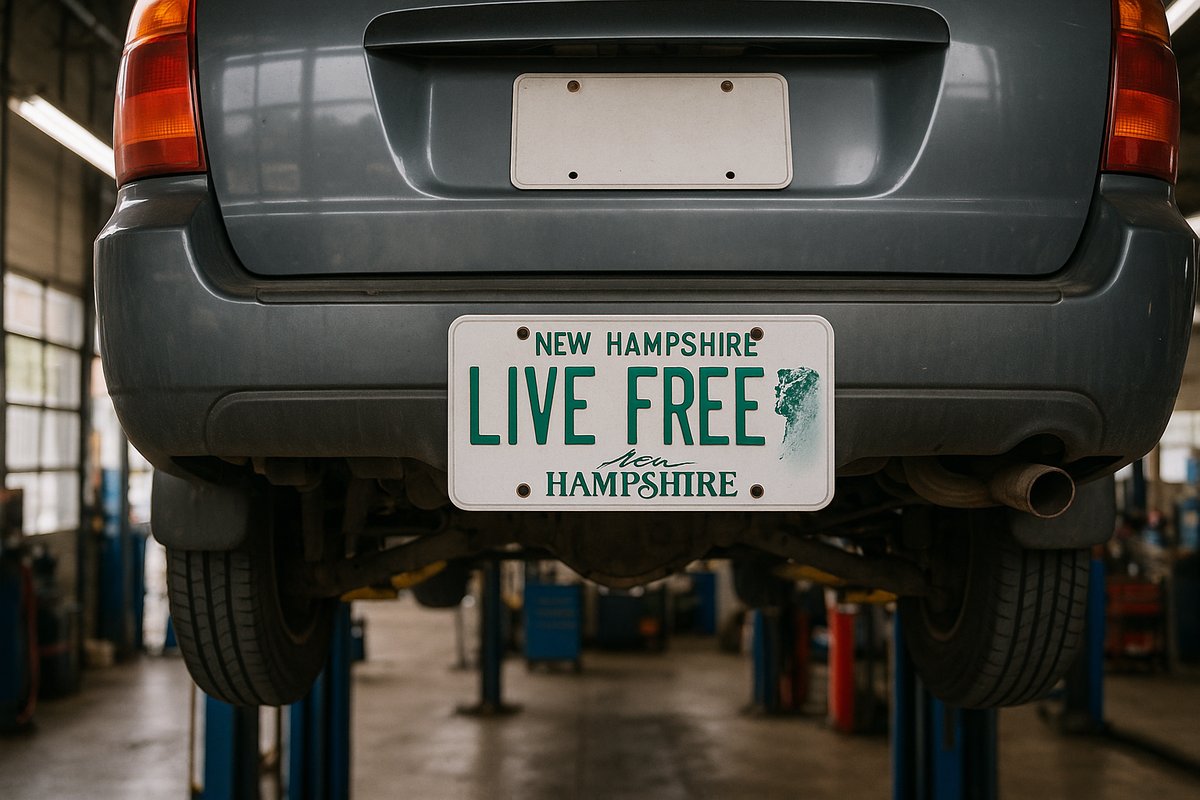
Last June, the New Hampshire legislature voted to repeal mandatory vehicle inspections. Governor Ayotte signed it into law. The program ended January 31, 2026.
Three days before the repeal took effect, a federal judge ordered the state to keep running it.
The state refused. Now the case is at the First Circuit Court of Appeals, and the question at the center of it has implications far beyond inspection stickers: Can a federal court force a state to enforce a law its own legislature has repealed?
How We Got Here
New Hampshire's vehicle inspection and maintenance (I/M) program has been in place for decades, required as part of the state's obligations under the federal Clean Air Act. The state is a member of the Ozone Transport Region, a group of 12 Northeast and Mid-Atlantic states plus D.C. established by the 1990 Clean Air Act amendments. Membership requires states to implement vehicle emissions testing programs.
Gordon-Darby Holdings, a Kentucky-based company acquired by Swedish firm Opus Group for $55 million in 2018, has administered NH's inspection program since 2004. The company's system processed roughly 1.3 million vehicle inspections per year. The most recent contract ran through December 31, 2026, with the state paying nothing directly. Instead, Gordon-Darby's subsidiary billed participating inspection stations at fixed rates, and those costs were passed on to motorists through mandatory inspection fees.
The repeal of inspections was included in HB2, the state's biennial budget trailer bill. It passed the House by a single vote, 184-183. House Majority Leader Jason Osborne acknowledged the repeal was the political sweetener that got the budget deal across the finish line.
“When I'm in the barber shop or the grocery store, the one thing they ask me about is, 'When are you going to repeal those car inspections?' And that's what we're doing today.”House Majority Leader Jason Osborne (R-Auburn)
On September 16, 2025, the Department of Safety sent Gordon-Darby a notice terminating the contract for convenience, effective January 31, 2026. The contract contained a termination-for-convenience clause. Gordon-Darby's revenue stream was about to disappear.
The Lawsuit
On October 7, 2025, Gordon-Darby filed a 60-day citizen suit notice under the Clean Air Act. On December 8, it filed suit in federal court, alleging that terminating the inspection program without EPA approval violated the Clean Air Act. The company sought a preliminary injunction to keep the program running.
The state moved to dismiss, arguing Gordon-Darby lacked standing. The company's harm was economic, not environmental. It was a private contract dispute dressed up as a Clean Air Act case. But the District Court declined to resolve the standing question before ruling on the injunction.
On January 27, 2026, U.S. District Judge Landya McCafferty issued a 44-page preliminary injunction ordering the state commissioners to "take all steps necessary to resume and ensure the continued implementation and enforcement of" the inspection program. The order came three days before the legislature's repeal was set to take effect.
The Defiance
The state did not comply.
Executive Councilor John Stephen was among the first elected officials to publicly challenge the court's authority. Stephen called the injunction unconstitutional and urged the Attorney General to raise the anti-commandeering doctrine.
“No federal court has the power to force state officials to administer a program the legislature has eliminated. No state constitutional office in America is safe from being commandeered by a federal court if this order stands.”Executive Councilor John Stephen
On February 4, the Executive Council voted 3-2 against extending the Gordon-Darby contract. Stephen, Kenney, and Wheeler voted no. Without the contract, there was no vendor to run the inspection system. Without the vendor, there was no system to enforce.
Attorney General John Formella issued public guidance stating that the "vehicle inspection program is suspended until further notice." That language directly contradicted the court's order. Formella's office simultaneously filed a motion asking the District Court to stay the injunction, and when that was denied on February 25, appealed to the First Circuit.
On February 26, McCafferty denied the stay and ordered inspections reinstated immediately. The state continued to treat the program as suspended.
On March 13, Gordon-Darby filed a contempt motion, seeking "significant escalating fines" against the state commissioners until the program is restored.
On March 19, the state filed its motion to stay the injunction at the First Circuit, which is the document that brought this case to wider attention.
The Timeline
Legislature repeals inspections via HB2, signed by Governor Ayotte. Effective January 31, 2026.
NHDOS terminates Gordon-Darby contract for convenience, effective January 31.
Gordon-Darby files suit in federal court under the Clean Air Act's citizen suit provision.
NH petitions EPA to amend the State Implementation Plan and withdraw from the Ozone Transport Region.
Judge McCafferty issues preliminary injunction ordering the state to continue the inspection program.
Executive Council votes 3-2 against extending the Gordon-Darby contract.
State files notice of appeal to the First Circuit.
McCafferty denies the stay and orders inspections reinstated immediately. State continues to treat program as "suspended."
Gordon-Darby files contempt motion seeking fines against state commissioners.
State asks First Circuit to stay the injunction pending appeal. The motion raises anti-commandeering, standing, and Tenth Amendment arguments.
The Legal Arguments
The state's appeal raises several arguments that legal scholars have called significant.
Anti-commandeering. The Tenth Amendment prohibits the federal government from compelling state officials to administer federal regulatory programs. The Supreme Court established this in Printz v. United States (1997) and reinforced it in Murphy v. NCAA (2018), where the Court struck down a federal law that prevented states from repealing their own sports gambling bans. The state argues McCafferty's order does exactly what Murphy prohibits: it forces state officials to enforce a program that the state legislature has repealed. Executive Councilor Stephen was the first to publicly frame the case in these terms, warning that "no state constitutional office in America is safe from being commandeered by a federal court" if this order stands.
Standing. Gordon-Darby's injury is economic, not environmental. The company lost a contract. It is not claiming harm from vehicle emissions. The state argues the Clean Air Act's citizen suit provision was designed for environmental enforcement, not to protect private vendor revenue. No other District Court has ever granted this type of relief under the CAA, according to the state's filing.
Redressability. Even if the court could order the state to continue the I/M program, it cannot order the state to contract with Gordon-Darby specifically. Under RSA 4:15, state contracts require Governor and Executive Council approval. The Executive Council voted against extending the contract. The court cannot override that vote.
The speech issue. The District Court's order found the state in violation partly because state officials informed the public that inspections were no longer required. The state argues this amounts to a federal court controlling what state officials may say to their own citizens about state law.
Jonathan Adler, a law professor at Case Western Reserve University, has written three pieces for the Volokh Conspiracy calling the injunction "shocking" and arguing it is "well-established that the federal government cannot require that state governments adopt or enforce regulatory measures."
The Air Quality Question
Both sides agree that ending the inspection program without EPA approval places New Hampshire out of compliance with the Clean Air Act. The disagreement is about what remedies are appropriate.
The state has submitted a technical demonstration to the EPA showing that discontinuing the I/M program will not interfere with air quality standards in New Hampshire or the broader Northeast Ozone Transport Region. New Hampshire has met federal ozone standards since 2012. NOx emissions are down 48% since 2008. In July 2024, the state had zero air quality action days despite record heat waves.
The Clean Air Act provides specific remedies for states that fall out of compliance: loss of federal highway funding, imposition of a Federal Implementation Plan, and penalties. What the Act does not authorize, the state argues, is forcing state executive officials to enforce a program that the state's own elected representatives have voted to eliminate.
The EPA has not yet acted on New Hampshire's petition. The review is expected to take 12 to 18 months.
What Happens Next
The First Circuit will rule on the state's motion to stay the injunction. If the stay is granted, inspections remain suspended while the appeal proceeds. If denied, the state will face a choice between complying with the court order and continuing to defy it, potentially facing contempt sanctions.
The underlying appeal will take months. The constitutional questions at stake go well beyond vehicle inspections. If a federal court can force a state to continue enforcing a law its legislature has repealed, the implications reach into every area of state governance. If it cannot, the federal government's leverage over noncompliant states is limited to the penalties Congress has already authorized.
For now, New Hampshire motorists do not need inspection stickers. The state says the program is suspended. A federal judge says it isn't. And a Swedish-owned company that stands to lose its $35-million-a-year contract is asking the court to hold the state in contempt for listening to its own legislature instead of a District Court judge.
“Judges are not legislators, and they do not get to determine the law in this state.”House Majority Leader Jason Osborne (R-Auburn)
Stay in the Fight
Get updates on New Hampshire freedom. No spam. Just facts.